iikoOffice covers the broader inventory workflow. Other tools in the section include:
Reference data and purchasing
Warehouses and units form the basis of inventory records. Accounting and tax categories, local taxes, manufacturers, concepts and payment attributes classify transactions. Suppliers, incoming and outgoing invoices, supplier and customer returns, supplier price lists, an internal price list and a price report support purchasing and comparison.
Warehouse operations
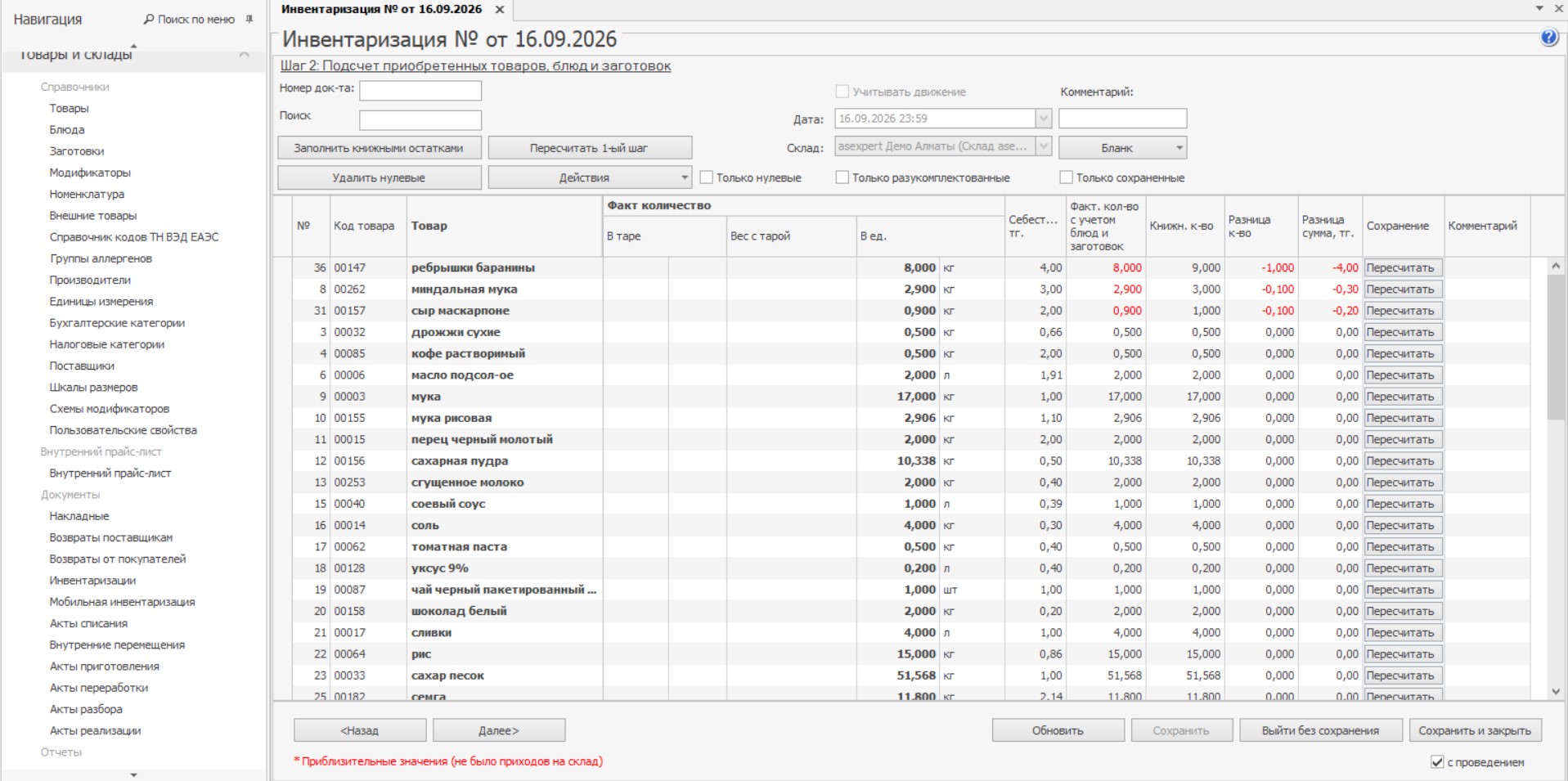
Stocktakes can cover all items or a group at the end of or during the day, with barcode scanner entry. Transfers can use one internal transfer document or a two-document flow. Separate records cover write-offs, preparation, processing, sales and disassembly; iikoKitchen brings some document work to the POS. Barcode printing in iikoFront and exporting data to scales are also available.
Balances and stock movement
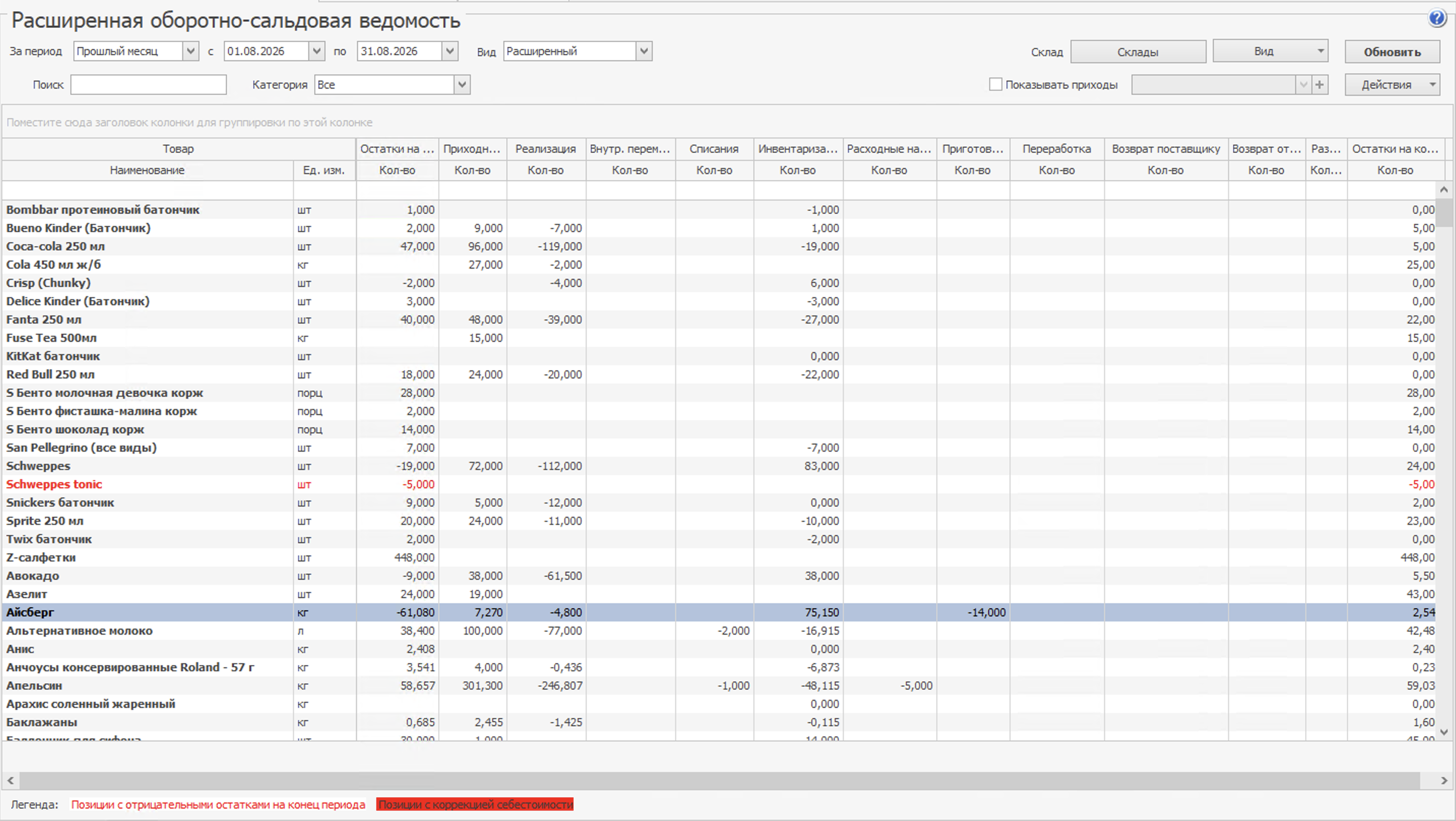
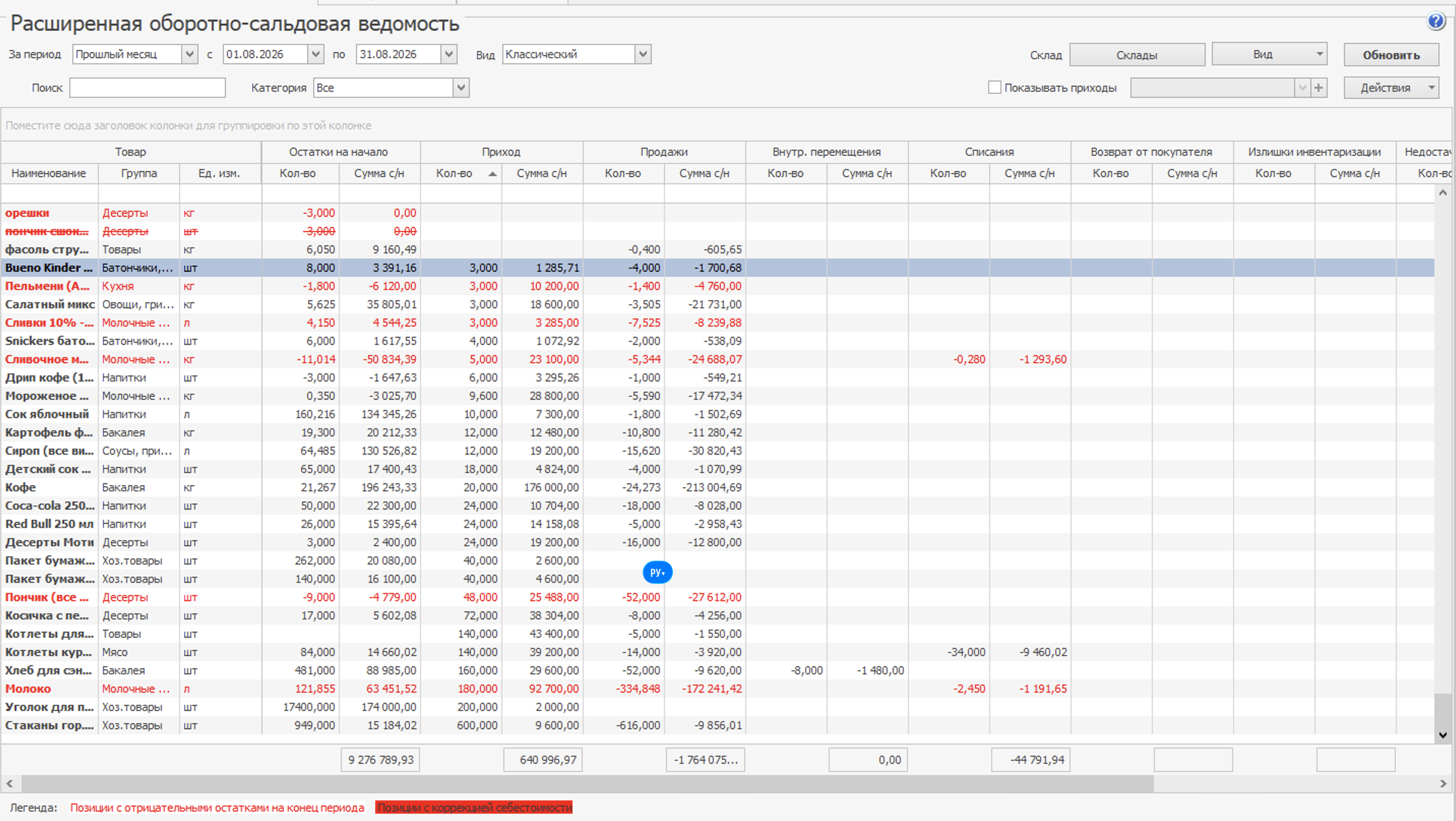
Warehouse balances show available items; negative-stock correction and reconciliation reports help investigate below-zero items. The extended stock statement and item movement report explain receipts and consumption. Cost-change, purchasing and purchase-discrepancy reports help review values and documents. The goods report and certificates add further item-level control.
Sales and dish composition
ABC/XYZ analysis reveals item demand. Period sales, unsold-dish and dish reports help review the menu. The ingredient-in-dish report links products to recipes, while a custom report brings selected measures together.
Menu and cost analysis
Dish ABC/XYZ analysis, menu recommendations, price trends and what-if scenarios help compare popularity, cost and possible price changes before making a decision.